


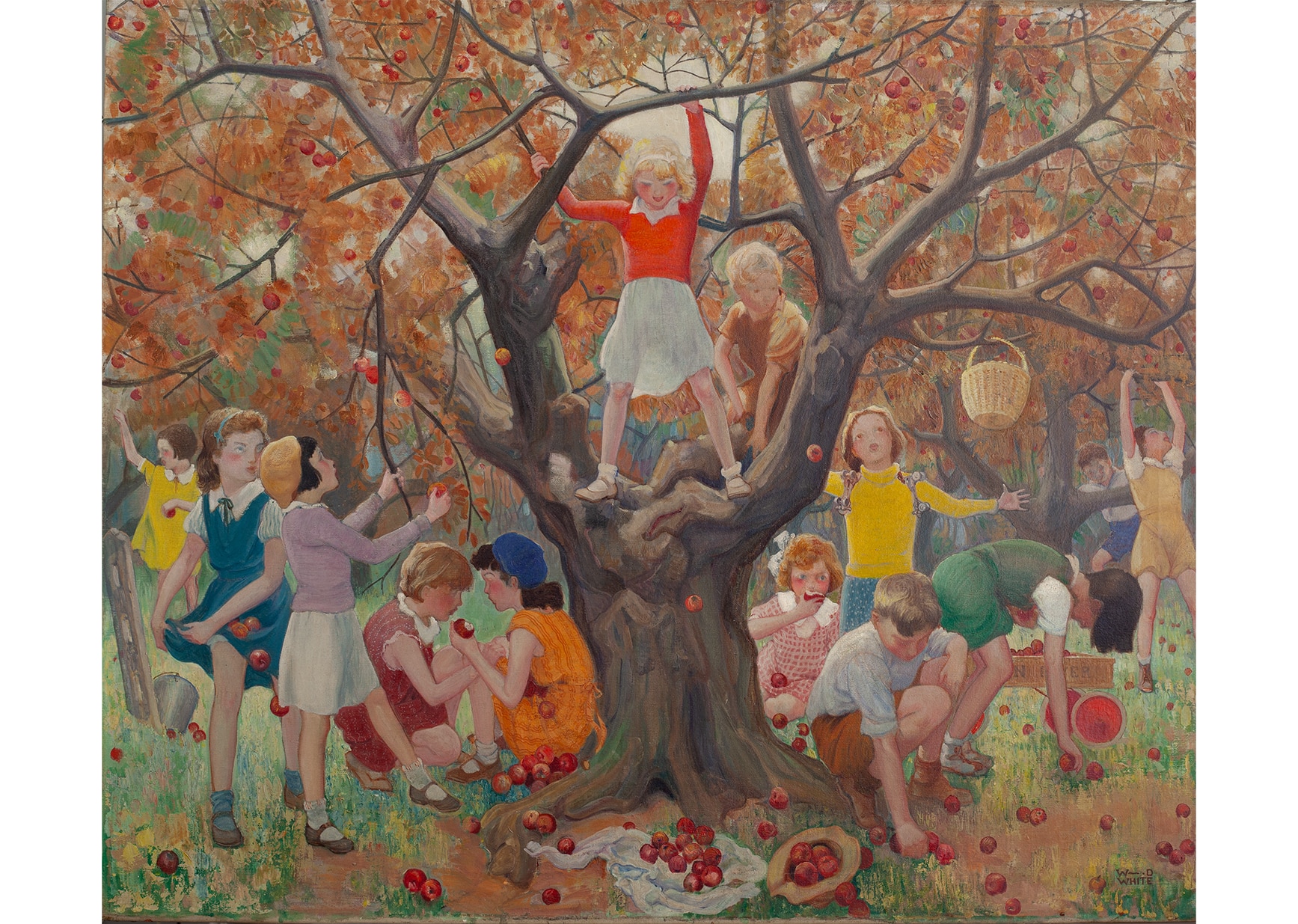
New Deal artist relief began in 1933 when the Public Works of Art Project (PWAP) expanded across the country with the help of local artist-administrators, who grew the PWAP to support 3,749 artists. Under the leadership of artist and Howard Pyle student Frank E. Schoonover, Delaware artists received “craftsmen’s wages” to produce original artworks for public use. When the PWAP ended in 1934, administrators in Philadelphia allocated works by Delaware and Philadelphia artists to the Wilmington Society for Fine Arts, now the Delaware Art Museum.
Citizen Artist will present these works together for the first time, allowing visitors to experience Delaware’s PWAP heritage in the context of public support for artists through the intertwined legacies of the New Deal and the Comprehensive Employment and Training Act. Several of the PWAP paintings required conservation treatment before they could be displayed in Citizen Artist. The Wilmington Society for Fine Arts initially loaned these works out so other institutions could decorate with locally-produced, original works of art. Outside the climate-controlled safety of art museum storage, these works lived rich lives – and had the dirt to prove it.
What does it take to prepare paintings for an exhibition? While visitors often encounter artworks at their most luminous—framed, lit, and seemingly untouched by time—the reality is that many have lived long and eventful lives. Before paintings reach the gallery wall, they pass through the careful hands of conservators.
Two paintings, Children in the Tree (1934) by William Davidson White and Winter Landscape (c. 1933–34) by Walter Willoughby, required cleaning to remove layers of dirt and dust that had accumulated over decades while on display in public spaces. Before these works could be exhibited in Citizen Artist, these layers of grime needed to be carefully removed from the painted surfaces.
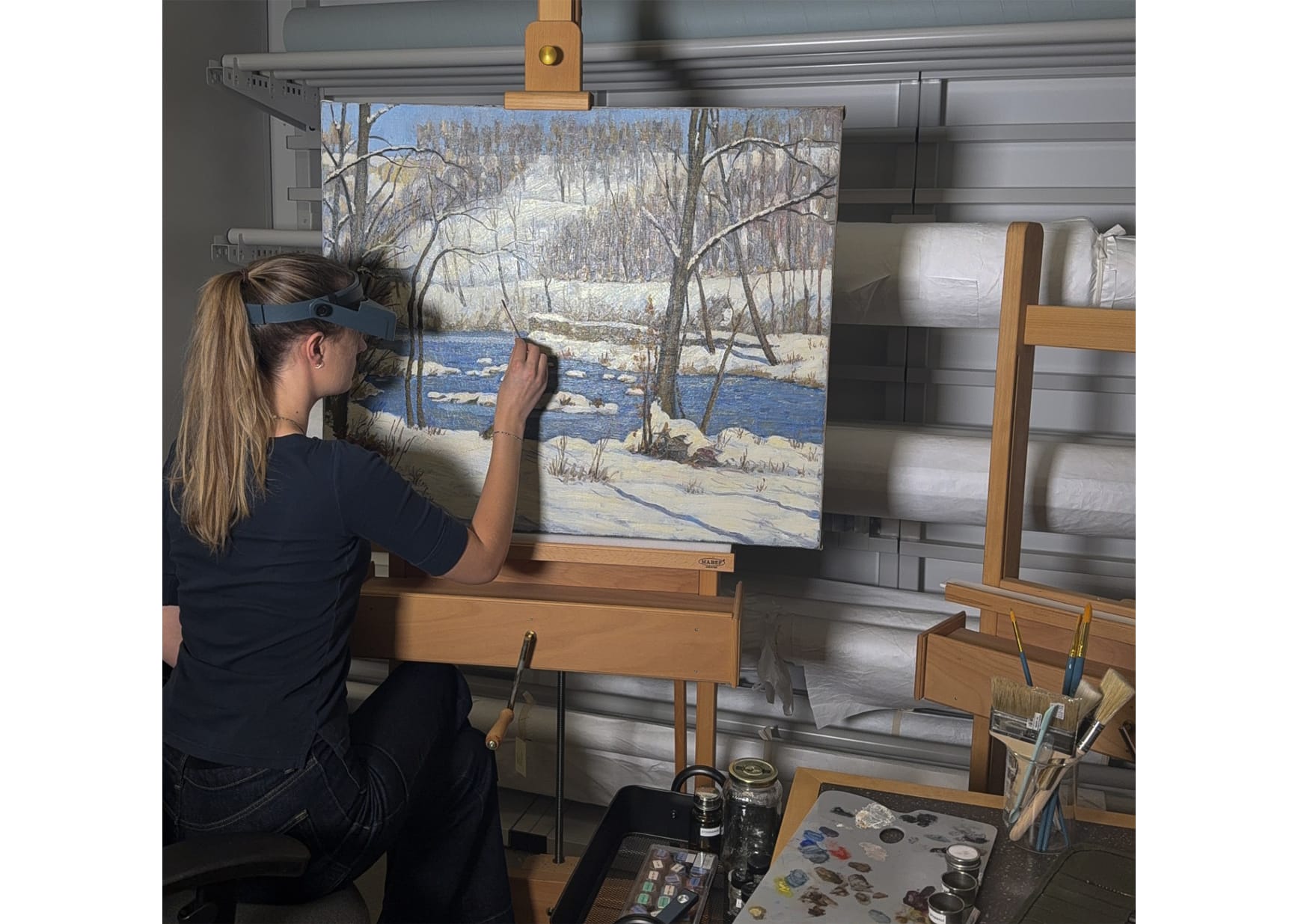 Fig 1
Fig 1
Surface cleaning requires not only a steady hand, but a deep understanding of materials, chemistry, and the structure of a painting. After meticulous testing, pH adjusted water was used to gently lift dirt from the surface using cotton swabs. Each pass revealed a small but satisfying transformation: colors brightened, details sharpened, and the surfaces regained a sense of depth (Fig 1).
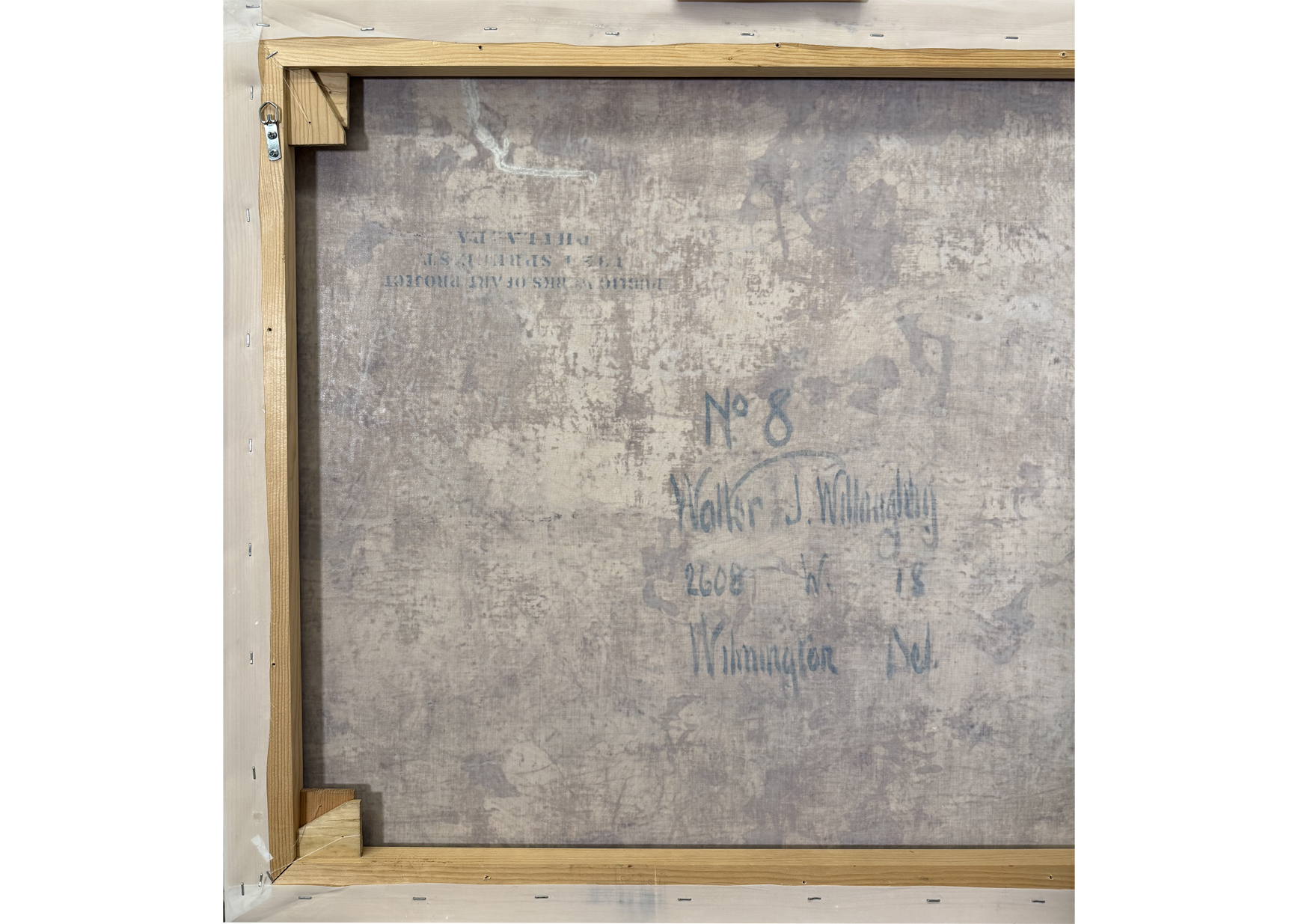 Fig 2
Fig 2
The conservation process also offered an opportunity to uncover each painting’s physical history. In one particularly striking case, Children in the Tree revealed an unexpected chapter: in 1980, an unknown individual had drawn moustaches onto the figures in graphite pencil. This mischievous act of vandalism—now no longer visible—was recorded in the museum’s conservation files, offering a glimpse into the work’s past. Meanwhile, unframing Winter Landscape allowed for close inspection of the reverse of the canvas, where stamps and inscriptions provided further clues about its production and history (Fig. 2). These hidden details, normally unseen by viewers, form an important part of the artwork’s story. An inscription from the artist reveals the location of his Wilmington home and studio, while a stamp records the painting’s passage through the offices in Philadelphia that served as regional headquarters for the PWAP.
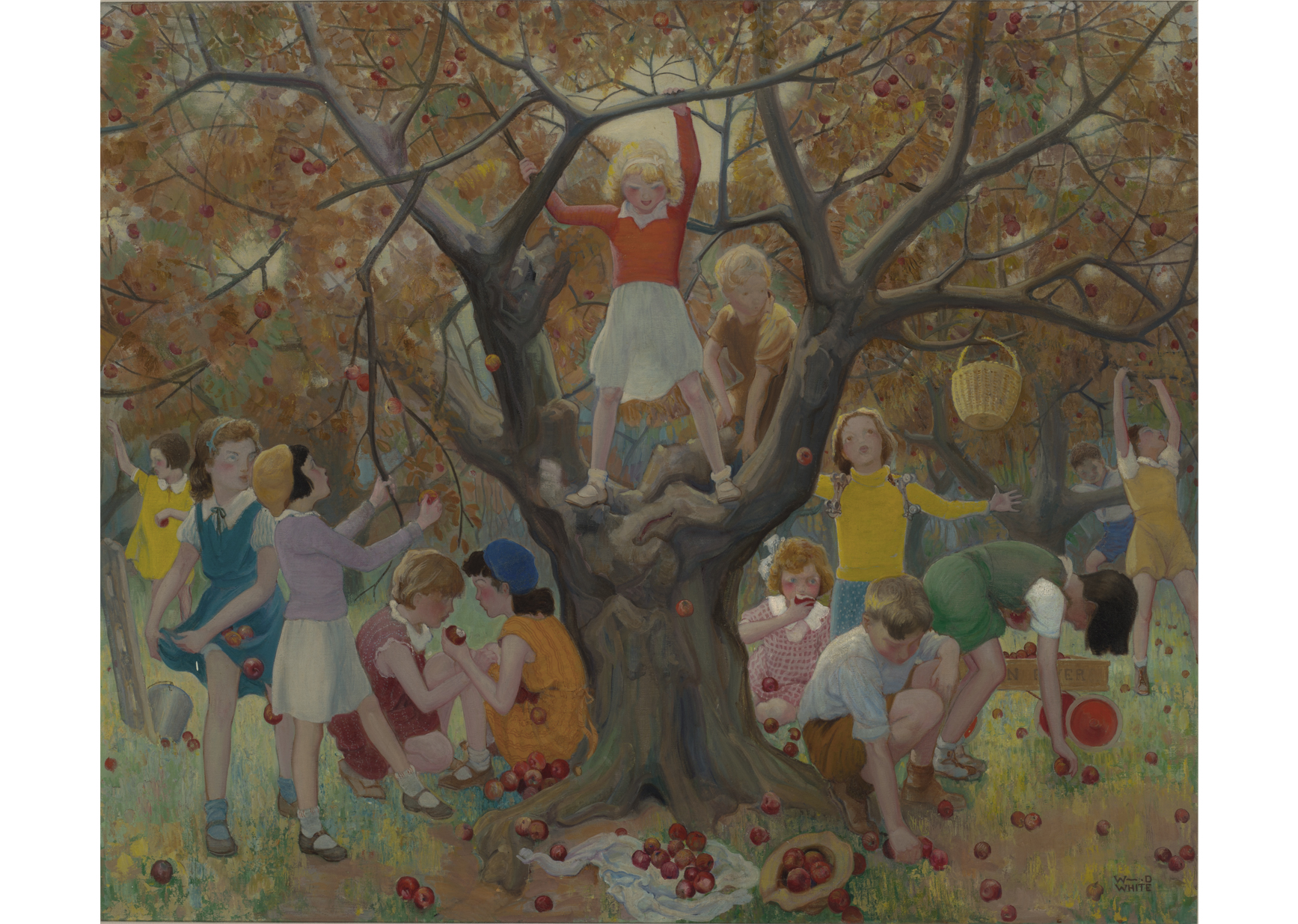 Fig 3
Fig 3
With their surfaces cleaned and their histories better understood, both paintings have been reframed and are now ready for display. During your visit to Citizen Artist, take a moment to look closely. Beneath the surface lies not just the artist’s vision, but the quiet, meticulous work behind the scenes that allows these paintings to be seen anew (Fig 3 and Fig 4-top).

 Written by Alexandra Earl, Pre-doctoral Conservation Fellow and Dorothy Fisher, Lynn Herrick Sharp Curatorial Fellow
Images: Children in the Tree, 1934. William Davidson White, 1896–1971. Oil on canvas. Delaware Art Museum, Louisa du Pont Copeland Memorial Fund and Gift of the 3rd Regional District of the P.W.A.P., 1934. Winter Landscape, c. 1933-34. Walter Willoughby, 1886-1973. Oil on canvas. Delaware Art Museum, Gift of the 3rd Regional District of the P.W.A.P., 1934.